
Sheep Grazing Benefits for Soil Health Biodiversity and Sustainable Farm Management

A pasture left alone does not always become healthier. Grass can get rank and stemmy, weeds can crowd out better forage, and dead plant matter can build into a mat that blocks new growth. Managed well, sheep grazing turns that problem into an asset.
Sheep are small ruminants with a light footprint, a selective bite, and a steady habit of moving nutrients across the land. Their grazing can support healthier soils, more diverse plant life, better pasture quality, and lower vegetation management costs. For farms, ranches, orchards, vineyards, and conservation areas, sheep can work like a living land-management tool.
The key phrase is managed well. Good grazing improves land over time. Poor grazing can weaken plants, expose soil, and reduce productivity. The difference comes down to timing, stocking rate, rest, and observation.
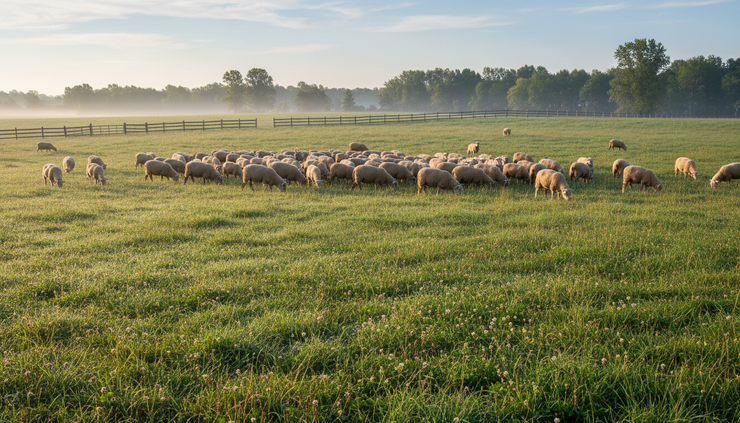
Sheep improve soil by cycling nutrients and feeding plant roots
Soil health starts with living systems. Plants capture sunlight, roots feed soil organisms, and grazing animals return nutrients through manure and urine. Sheep fit neatly into that cycle.
When sheep graze a pasture, they remove part of the plant aboveground. In response, plants often shed some root material and then regrow. That root turnover feeds microbes and helps build organic matter over time. More organic matter can improve soil structure, water infiltration, and the soil’s ability to hold nutrients.
Sheep also spread manure in small deposits across the field. This returns nitrogen, phosphorus, potassium, and other nutrients to the pasture. Unlike a single pile of compost dumped in one place, a moving flock distributes fertility in a patchwork pattern. Dung beetles, earthworms, fungi, and bacteria then help break it down and carry nutrients into the soil.
Good grazing also protects the soil surface. A well-managed pasture keeps living roots in the ground and enough leaf cover above it. That cover shields soil from heavy rain, wind, and hot sun. Bare soil loses moisture faster and erodes more easily. Dense forage works like a living armor.
The goal is not to graze grass down to the dirt. A pasture needs leaf area to recover. Leaving a healthy residual height helps plants restart growth quickly, shade the soil, and compete against weeds.
Healthy grazing supports soil in several ways:
Better nutrient cycling
Sheep return plant nutrients through manure and urine, which supports pasture fertility.
More active soil biology
Managed grazing feeds soil organisms through root growth, root turnover, and organic matter.
Improved water movement
Dense roots and covered soil help rainfall soak in rather than run off.
Less erosion
A covered pasture keeps soil in place during storms and dry windy weather.
For farms trying to reduce purchased fertilizer inputs, these benefits have real economic value. They do not replace soil testing or a balanced fertility plan, but they can make the whole system more efficient.
Grazing helps biodiversity when animals move at the right pace
Biodiversity in a pasture means more than seeing a few wildflowers. It includes grasses, legumes, broadleaf plants, insects, soil organisms, birds, and the wildlife that depend on varied habitat. Sheep can support that diversity when grazing pressure changes across time and space.
If a field is never grazed or mowed, stronger plants may shade out smaller ones. Thick thatch can form near the ground. Seedlings have trouble reaching light and soil. Over time, plant variety may decline.
If a field is grazed too hard for too long, the opposite problem appears. Palatable plants weaken, bare ground expands, and weeds that tolerate stress gain an advantage.
The middle ground is managed disturbance. Sheep create disturbance by biting plants, trampling some residue, and opening small gaps in the canopy. Those gaps can help seeds germinate. Their manure feeds insects and soil life. Their movement across a field creates slight differences in height and structure, which can support a wider mix of species.

Sheep are especially useful because of how they graze. Compared with cattle, they have smaller mouths and can graze closer to the ground. They readily eat many broadleaf plants and tender weeds. That can be useful for controlling certain unwanted species, although no animal should be expected to solve every weed problem alone.
Biodiversity improves most when grazing creates a mosaic. Some areas are grazed short, some are left taller, and some get longer rest. This variety gives more plants and insects a place to fit.
Practical ways to support biodiversity include:
Rotate sheep before they repeatedly bite the same new regrowth.
Leave some pasture areas taller during nesting and flowering seasons when possible.
Avoid grazing wet soils so hoof action does not cause compaction.
Maintain hedgerows, field edges, and buffer strips as habitat.
Use mixed forage species, including grasses and legumes suited to the region.
Sheep grazing can also reduce the need for mechanical mowing in some settings. Less mowing may mean lower fuel use, less noise, and less disturbance for wildlife. On farms where vegetation control is a recurring cost, a flock can turn that work into meat, wool, milk, or breeding stock.
Sheep prevent overgrowth and turn vegetation control into farm value
Overgrowth is not just an aesthetic issue. Tall, rank vegetation can lower forage quality, hide hazards, encourage certain pests, and make fields harder to manage. In some regions, heavy dry growth can also add to fire risk around fence lines, orchards, solar sites, and open fields.
Sheep help by eating the growth while it is still useful. Young, leafy plants usually offer better nutrition than mature, stemmy forage. Timed grazing keeps plants in a more productive growth stage. Instead of spending money only to cut and leave vegetation behind, a farmer can harvest that growth through livestock.
This is where sheep often shine. Their size makes them easier to use in tight or delicate areas where larger animals may be harder to manage. They can graze under some orchard trees, along alleys, and in smaller paddocks. They can also work well on uneven ground where mowing is difficult.
That said, sheep are not automatic landscapers. They still need fences, water, shade or shelter, predator protection, and daily oversight. Certain plants can be toxic. Young trees, vines, and desirable shrubs may need guards or exclusion if sheep are likely to browse them. Good planning prevents damage.
The best results come when grazing has a clear purpose. A flock might be used to:
Keep grass from becoming overly mature.
Suppress weeds before they set seed.
Reduce mowing in hard-to-reach areas.
Convert cover crops into manure and animal gain.
Improve pasture density through timed defoliation and rest.
A managed flock can also help break pest and parasite cycles when moved often and given adequate rest periods. Internal parasites are a major concern in sheep, especially in warm and humid regions. Rotational grazing cannot eliminate the risk, but it can reduce repeated exposure when paired with proper stocking rates, fecal monitoring when needed, and veterinary guidance.

For many farms, the economic advantage is the combination of services. Sheep produce saleable products while also managing vegetation and returning fertility to the land. That stacked value is one reason sheep grazing benefits for soil health biodiversity and sustainable farm management remain relevant across many farm sizes.
Effective grazing depends on timing, stocking rate, and rest
The most productive grazing systems are built on observation, not guesswork. Pastures change with rainfall, temperature, soil type, forage species, and the number of animals. A plan should guide decisions, but field conditions should shape the final call.
Three ideas matter most.
Timing controls plant quality. Graze when forage is tall enough to provide a good bite but before it becomes woody and low-quality. This keeps sheep nutrition higher and encourages leafy regrowth.
Stocking rate controls pressure. Too many sheep in one place for too long can weaken pasture. Too few can leave forage underused and allow selective grazing. The right number depends on forage supply, animal size, season, and recovery goals.
Rest controls persistence. Plants need time to replace leaf area and rebuild root reserves. Rest periods are usually shorter during fast spring growth and longer during summer heat, drought, or cold weather.
A simple grazing rotation can start with temporary electric fencing. Divide a field into smaller paddocks, move sheep based on forage use, then let each area recover. Some farms move sheep daily. Others move every few days. The right pace depends on labor, paddock size, forage growth, and animal needs.
Grazing practice | What it does | Why it helps pasture quality |
Rotational grazing | Moves sheep through smaller paddocks | Gives plants time to regrow before being grazed again |
Adequate residual height | Leaves enough leaf area after grazing | Speeds recovery and shades the soil |
Seasonal adjustments | Changes paddock size and rest time as growth changes | Prevents overgrazing during slow growth and waste during fast growth |
Mixed forage stands | Combines grasses, legumes, and other useful plants | Improves diet variety and supports soil life |
Regular pasture walks | Checks plant height, weeds, manure spread, and bare spots | Catches problems before they become expensive |
Pasture walks may be the most underrated tool. A farmer can learn a lot in 15 minutes by looking closely. Are sheep grazing evenly or only picking favorite plants? Are there bare patches near water or shade? Is manure well distributed? Are plants recovering, or are they being bitten again too soon?
Records help too. Note move dates, paddock conditions, rainfall, pasture height, and animal performance. Over time, these notes reveal patterns. They show which fields recover quickly, which need fertility, and which areas need reseeding or rest.
Better pasture quality supports healthier animals and stronger margins
Pasture quality affects both ecology and farm income. Leafy, diverse forage can support better weight gain, milk production, reproductive performance, and overall flock condition than poor pasture. High-quality forage can also reduce the need for stored feed during the grazing season.
Poor grazing often costs money twice. It lowers pasture productivity, then forces a farm to buy more hay, seed, fertilizer, or weed control. Better grazing keeps more value inside the farm system.
Sheep do best when pasture offers:
Enough dry matter for full intake.
A mix of grasses and legumes where conditions allow.
Clean water close enough to support grazing distribution.
Mineral supplementation matched to local needs.
Safe fencing and protection from predators.
Rested paddocks that reduce repeated parasite exposure.
Pasture quality is not only about what grows. It is also about how sheep use it. Water placement, shade, laneways, and mineral feeders all influence grazing patterns. If sheep spend most of their time in one corner, that area gets overused while other forage matures. Moving attractants can improve distribution.

Here are practical tips for improving results.
Start with a small rotation. A full paddock map can feel overwhelming. Begin by splitting one field into two or three sections, then improve from there.
Match flock size to forage supply. If sheep run out of feed before the next paddock is ready, reduce numbers, add acreage, or provide supplemental feed.
Avoid grazing too close. Very short grazing slows regrowth and can expose soil. Leave enough plant material to catch sunlight.
Rest longer during stress. Drought, heat, cold, and low fertility all slow recovery. The grazing calendar should stretch when plants grow slowly.
Protect sensitive areas. Keep sheep out of streambanks, wet spots, and fragile soils unless conditions are dry and grazing is carefully controlled.
Use sheep behavior. Sheep like routine. Consistent moves, easy water access, and reliable fencing make the system calmer and more efficient.
Plan for parasite pressure. Rotate with recovery time, avoid forcing sheep to graze very close to the ground, and work with a veterinarian or extension professional on parasite management.
Reseed only after fixing management. Thin pasture may need seed, but seed alone will not solve repeated overgrazing, low fertility, or poor drainage.
Sustainable farming is often described in big terms, but on the ground it comes down to daily choices. Where sheep graze today affects what grows next month. What grows next month affects soil cover, feed costs, animal health, and next year’s pasture.
The best grazing systems work with the land, not against it
Sheep grazing is valuable because it connects ecology and economics. A flock can manage vegetation, feed the soil, support more varied plant communities, and produce income from land that might otherwise require fuel, machinery, or outside inputs to maintain.
The benefits are strongest when grazing is intentional. Move sheep before they overuse regrowth. Give pastures real rest. Watch the plants as closely as the animals. Adjust the plan when weather changes. Build diversity into the forage base. Protect soil cover like it is a crop, because it is.
Well-managed sheep do more than eat grass. They help keep pastures active, useful, and resilient. For farms looking to improve land while producing value, grazing sheep can be one of the most practical tools available.


Comments